

How to keep snow off a heat pump in a Rhode Island winter
How do I keep snow off my heat pump in the winter?
A nor'easter dumps a foot of snow and your heat pump sits outside buried in it, or worse, wedged under the drip line off the roof. You're wondering if you need to dig it out yourself every time it snows, or if there's a way to keep ahead of it so the unit keeps running through a Rhode Island winter without you shoveling it out every other day.
Clear the area around it and keep snow from piling against the sides
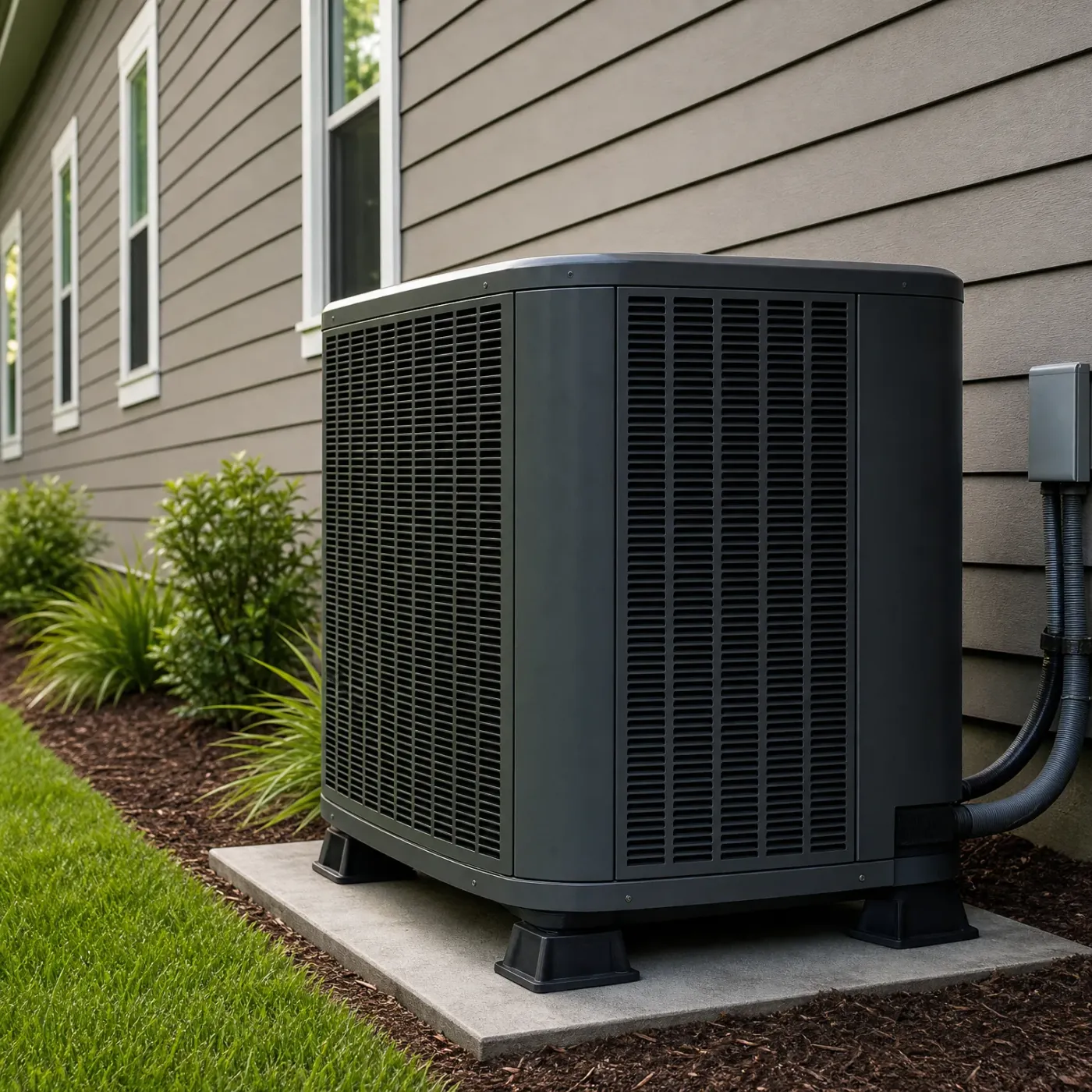
Keep a clear space around the outdoor unit, at least a foot on every side, so snow doesn't build up against the coil and block airflow. Brush off loose snow from the top with a broom rather than digging into it, and never chip at ice with a shovel or hard tool. The bigger risk in Rhode Island is where a house sits under a roofline that sheds snow and ice straight onto the unit below. If yours is in that spot, that pileup can bend the coil fins or crush the cabinet. A clear path matters too, since a unit fighting through snow runs harder and pulls more power on a grid where electricity already costs more than most places.

Summer here isn't just hot, it's heavy. The average dew point across June, July and August runs 61°F, Source: NOAA climate data. That's the kind of air that makes your heat pump work in both directions a few months later. A unit that spent the summer pulling thick, humid air across its coil picks up grime faster than one running dry air. Grime on the coil traps heat and cold alike, so by the time snow season rolls around, you've got a unit that was already working harder than it should before the first flake ever landed on it.
NASA POWER T2MDEW county cells weighted by homes
Why does my heat pump keep icing up or shutting off?
After a storm, look at the outdoor unit. If snow is packed against the sides or piled on top, the fan can't pull air through the coil, and the system will struggle or trip off entirely. Check under the roofline too. A unit set there catches whatever slides off during a thaw or the next snowfall, and that pile can bury the coil faster than the storm itself did. You might hear the fan straining, notice ice building along the bottom panel, or find the heat running longer without the house getting warmer. Left buried, the coil can ice over solid, and the unit may stop producing heat when you need it most.

Cold outdoor air gives up heat to refrigerant inside the coil
Frost builds on the coil every time it runs in winter
A reversing valve flips the cycle and runs hot gas backward
Hot refrigerant melts the frost off the outdoor coil fast




A pro who works on heat pumps
Fill out one form instead of calling around for a heat pump tune-up.
Say what's going on with your heat pump, and a pro who works on them reaches out.
You're not committing to anything by asking.


Your heat pump needs open air on two sides and across the top for the fan to draw air through the coil. That's why a stand or pad matters. It lifts the unit above the depth a typical Rhode Island storm will pile up, so you're not digging down to the housing every time it snows. The roofline matters just as much. Without a snow guard or small cover, melt off the roof and gutters drips straight onto the coil and the lines, and that water refreezes as ice faster than the defrost cycle can keep up with. When you do clear snow off the unit, use a broom, not a shovel. A shovel edge can bend the fins or crack the housing, and bent fins choke airflow the same way packed snow does. Set up right, with clearance, a stand, and something over the top to stop the drip, there's less to clear by hand after every storm, and less chance the coil ices over before you get out there.
Keeping the Coil Clear
- A heat pump needs clearance on at least two sides and the top so the fan can pull outdoor air through the coil.
- Raising the unit on a stand or pad keeps the coil above the depth snow typically reaches in a Rhode Island storm.
- A snow guard or small roof over the top stops roof and gutter melt from dripping onto the coil and refrigerant lines.
- Clearing snow by hand with a broom works better than a shovel, which can bend the fins or crack the housing.
- Ice that forms faster than the defrost cycle can clear it usually means snow or meltwater reached the coil before you got to it.
- A unit set under an unguarded roofline will collect runoff all winter even after you clear the ground around it.


Keeping snow off your heat pump comes down to clearance: clear ground around it, nothing piled against the sides, and a guard or overhang keeping roof melt from dripping onto the coil. A unit set up that way shuts off less and runs easier through a storm. One set up badly spends the winter icing over, tripping off, and asking more of a system that's already working harder than it did in August. You can stay ahead of this yourself, clearing after every storm and checking the drip line before the next one, or you can have someone who knows Rhode Island winters look at placement and clearance once and be done with it. Either way the fix is the same, it's just a question of who's doing the digging. If you'd rather not be the one checking the unit every time it snows, a maintenance visit from a contractor who works on heat pumps in this kind of weather can settle it before the next nor'easter rolls through.


Get your heat pump to the right pro
A heat pump that stays clear through the winter still needs someone checking the coil, the defrost cycle and the refrigerant charge before the storms start. That's what maintenance covers. Finding that contractor yourself means calling around, explaining the same thing to each one, and sorting through quotes before anyone shows up. Answer a few questions here and a contractor who works on heat pumps in Rhode Island gets in touch directly, so your unit is ready for whatever gets dumped on it this winter.
Skip calling around to set up a heat pump tune-up.
It costs nothing to send, and you don't have to hire anyone.