White colonial houses with lit windows and dark shutters line a tree-lined street at dusk, bordered by dry-stacked stone walls.

Heat Pump Repair in Bristol, RI

Tell us about the job

Takes about a minute. No obligation.

RepairHeat PumpBristol County, RI
Step 1 of 2

What ZIP code is the job in?

The heat pump here isn't fighting extreme cold

Overnight lows average 25°F through December, January and February. That puts the heating side to work most of the year, since Bristol County falls in zone 5A, but it's not the deep sustained cold that wears a compressor down fast.

So a breakdown usually points to one bad part

A heat pump that hasn't been run hard by the climate tends to fail for a specific reason. A failing capacitor. A low charge. A stuck reversing valve. That's a different problem than a system worn out from years of strain, and it's usually worth fixing.

8 months
October through May, your system heats
2 months
July through August, it cools
25°F
the average winter night it heats against
80°F
the average summer afternoon it cools against
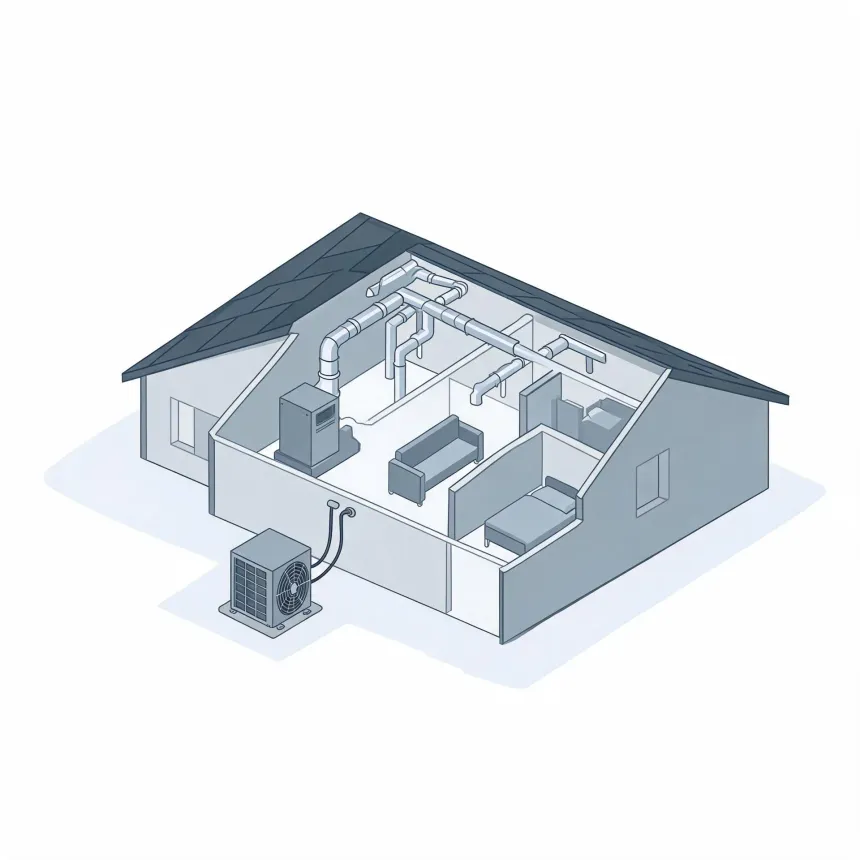
Isometric cutaway illustration of a single-story house showing interior rooms with furniture, an attic duct network connected to a furnace or air handler, and an outdoor condenser unit linked by lines outside the wall.
Your system heats October through May and cools July through August.

NOAA nClimDiv, 1991–2020 normals

Heat here starts in October, right after a September that asked nothing of this system.

A heat pump that sat quiet in September can show a weak part the first cold week it has to work.

Half the homes in Bristol County were built by 1957, old enough that the heat pump itself is probably newer than the house

Half the homes here were built by 1957
31 damaging wind events from 2015 to 2024
19 winter storms from 2015 to 2024
Rhode Island power isn't cheapElectricity here runs 28.65 cents per kilowatt-hour, so a heat pump limping along on a bad part costs you every month it stays that way.

Get a repair diagnosed before you decide to replace. A heat pump that failed from one bad part goes back to work once that part is swapped. Bristol County does see its share of rough weather, damaging wind and winter storms both hit here most years, so check the outdoor unit for storm damage first if the trouble started after a bad night. Loose panels, a bent fan guard, debris in the coil. None of that means the compressor is shot. It just means something took a hit and needs a look.

Find out what it needs before you replace it

If this is the first heat pump that house has had, ask the contractor how much life is left in it before you decide anything. A repair tells you that. A guess doesn't.

Find a contractor
A man in a dark jacket and tan work pants, seen from behind, carries a canvas duffel bag up wooden porch steps toward a red front door, beside a large terracotta pot holding a shrub.
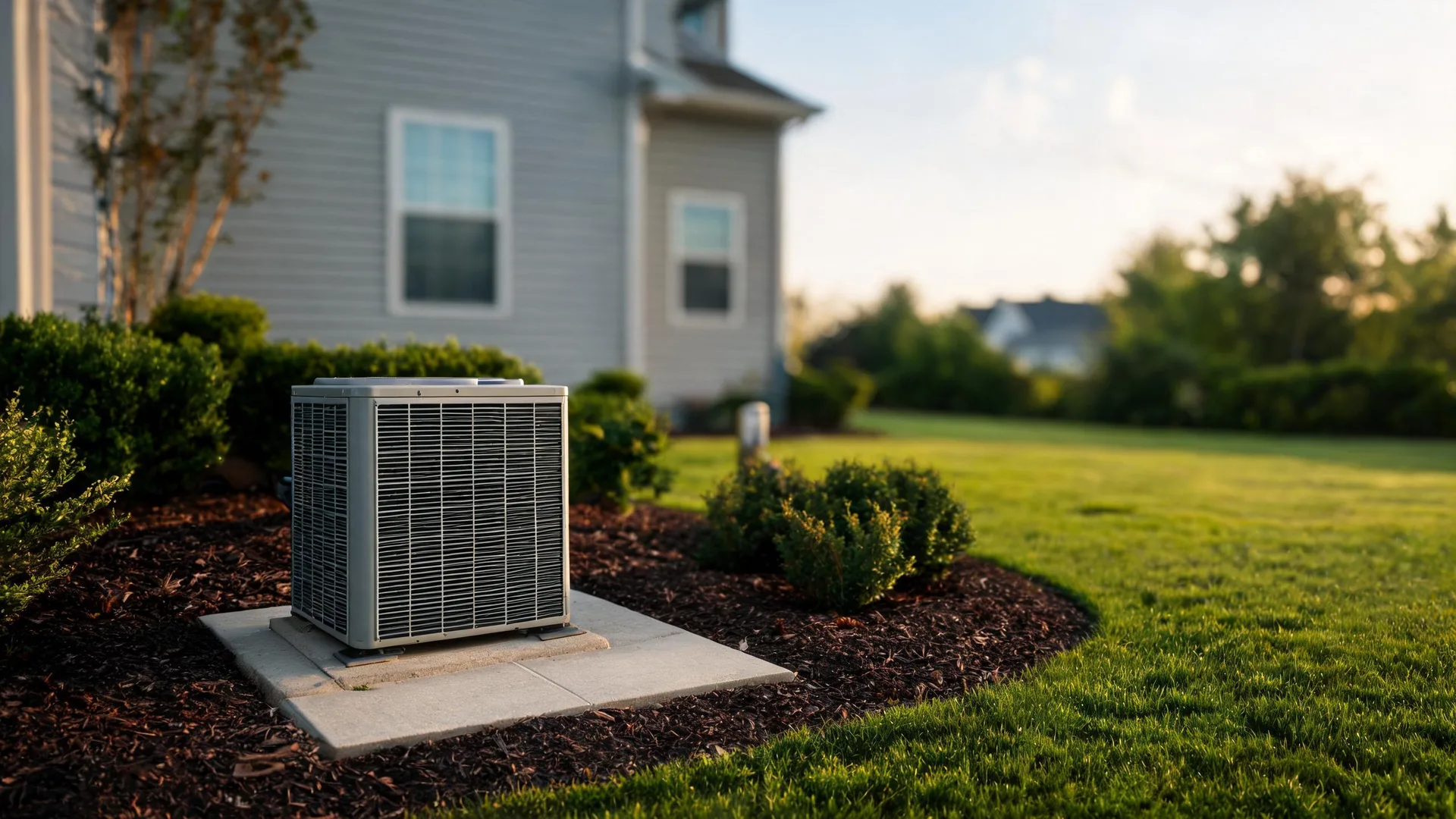
A dark gray heat pump unit mounted on a concrete pad next to a house with gray siding and a stone veneer wall.

What to look at before you pick up the phone

Check the thermostat first. Make sure it's set to heat and the temperature you want is actually above room temperature, not below it. Next look at the outdoor unit. If the coil is caked in ice beyond the thin frost that clears on its own during a normal defrost cycle, or if snow or leaves are packed against it, that alone can stop a heat pump cold. Clear what you can reach and see if it starts working. Inside, pull the air filter and hold it up to a light. If you can't see light through it, swap it or clean it. A clogged filter starves the system of airflow and can shut it down on a safety switch. Check the breaker panel too. A tripped breaker is often mistaken for a failed system, and resetting it once is worth trying. If the outdoor fan isn't spinning at all while the indoor side runs, or if you hear the unit trying to start and clicking off, stop flipping switches and call for service. That's a sign of an electrical or compressor problem, not something to force by resetting it again and again.

It's still blowing, just not warm

Air coming out of the vents that never gets above room temperature usually means the reversing valve is stuck in the wrong position, or the system is low on refrigerant. The blower running fine while the house stays cold is the tell. It's not a dead system, it's one working against itself.

Short cycling wears out the parts that are left

A heat pump that kicks on, runs a couple minutes, then shuts off and starts again a short while later is straining the compressor every time it restarts. Left alone, that cycle is what turns a one-part repair into a bigger one. A tech can usually tell what's forcing the shutdown the first time they see it happen.

A system fighting a fault doesn't hold steady while it waits for a tech. A low refrigerant charge is a good example. The compressor needs oil moving with that refrigerant to stay lubricated, and a system that keeps running while it's low pulls the compressor dry a little more each cycle. What started as a charge that needed topping off ends as a compressor that needs replacing. A failing capacitor works the same way. It'll let the motor limp along for a while, but every start without enough power behind it adds load the motor wasn't built to carry alone. A reversing valve stuck halfway is no different. The system keeps trying to heat, keeps running the compressor against a path that isn't fully open, and the longer that goes on the more wear lands on the one part that's hardest to replace. None of that means every strange noise is an emergency. But a system straining to start, tripping a safety switch, or short cycling is telling you it's working against something, not through it.

A heat pump that needs one part replaced is a repair. One that's near the end of its working life and failing in several ways at once is a different question, and the difference usually comes down to pattern, not just what broke today. A compressor failure on its own is often a replacement question, since that part costs more than most of what sits around it and a system old enough to lose one is old enough to lose the next. A capacitor, a contactor, a fan motor, a control board. Those fail on their own schedule, and swapping one doesn't mean the rest are close behind. What matters more is whether this is the first repair that system has needed or whether it keeps coming back with something new. A system that keeps failing in different ways is telling you it's worn out generally, not unlucky about one part. That pattern is worth more than guessing at how old the unit is.