







White colonial-style houses with lit windows photographed at dusk along a tree-lined street.

Heat Pump Repair in Newport, RI

Tell us about the job

Takes about a minute. No obligation.

RepairHeat PumpNewport County, RI
Step 1 of 2

What ZIP code is the job in?

Zone 5A means winter is the main event here, not summer, and heat pumps are built for exactly that kind of split duty. Newport County's overnight lows average 26°F through December, January and February, which is cold but not the kind of extreme that runs a heat pump into the ground. The bigger wear on a system usually comes from storms, and this county has seen damaging wind 36 times and winter storms 15 times over the past decade. That's hard on a condenser sitting outside, but it's a different kind of stress than year-round strain. A heat pump here is more likely to need a part fixed than a system replaced.

8 months
October through May, your system heats
2 months
July through August, it cools
26°F
the average winter night it heats against
79°F
the average summer afternoon it cools against
Isometric cutaway illustration of a single-story house showing interior ductwork, an indoor air handler, and an outdoor condenser unit connected by lines along the exterior wall.
Your system heats October through May and cools July through August.

NOAA nClimDiv, 1991–2020 normals

A failing heat pump rarely shuts itself off, it just starts sounding or feeling wrong.

Short cycling, air that never gets warm, or ice that won't melt between cycles are worth calling in before the compressor takes the hit.

Half the homes here were built in 1963 or earlier, old enough that the heat pump itself is rarely original

Half the homes here were built by 1963
36 damaging wind events from 2015 to 2024
15 winter storms from 2015 to 2024
Power here costs moreRhode Island electricity ran 28.65 cents per kilowatthour in 2024, so a heat pump running wrong costs you every month it goes unfixed.

If the outdoor unit has been through a few bad storms, that's a reason to get it looked at, not written off. Wind can knock a condenser out of alignment or drive debris into the coil without leaving an obvious mark. A tripped breaker after a storm doesn't mean the unit is done. It usually means a technician needs to check the coil, the fan blade and the wiring before resetting anything. Because a heat pump here isn't fighting extreme heat or extreme cold most of the year, a system that's been maintained normally still has life in it after a repair.

Find out what your heat pump has left before you fix it

If your heat pump isn't the one the house was built with, get a technician to tell you where it stands before paying for a repair. A unit with a lot of life left is worth fixing. One near the end of its run might not be, and that's worth knowing first.

Find a contractor
A man in a cap, gray long-sleeve shirt and tan work pants walks up wooden porch steps toward a red door, carrying a canvas tool bag, with a potted plant beside the entry.
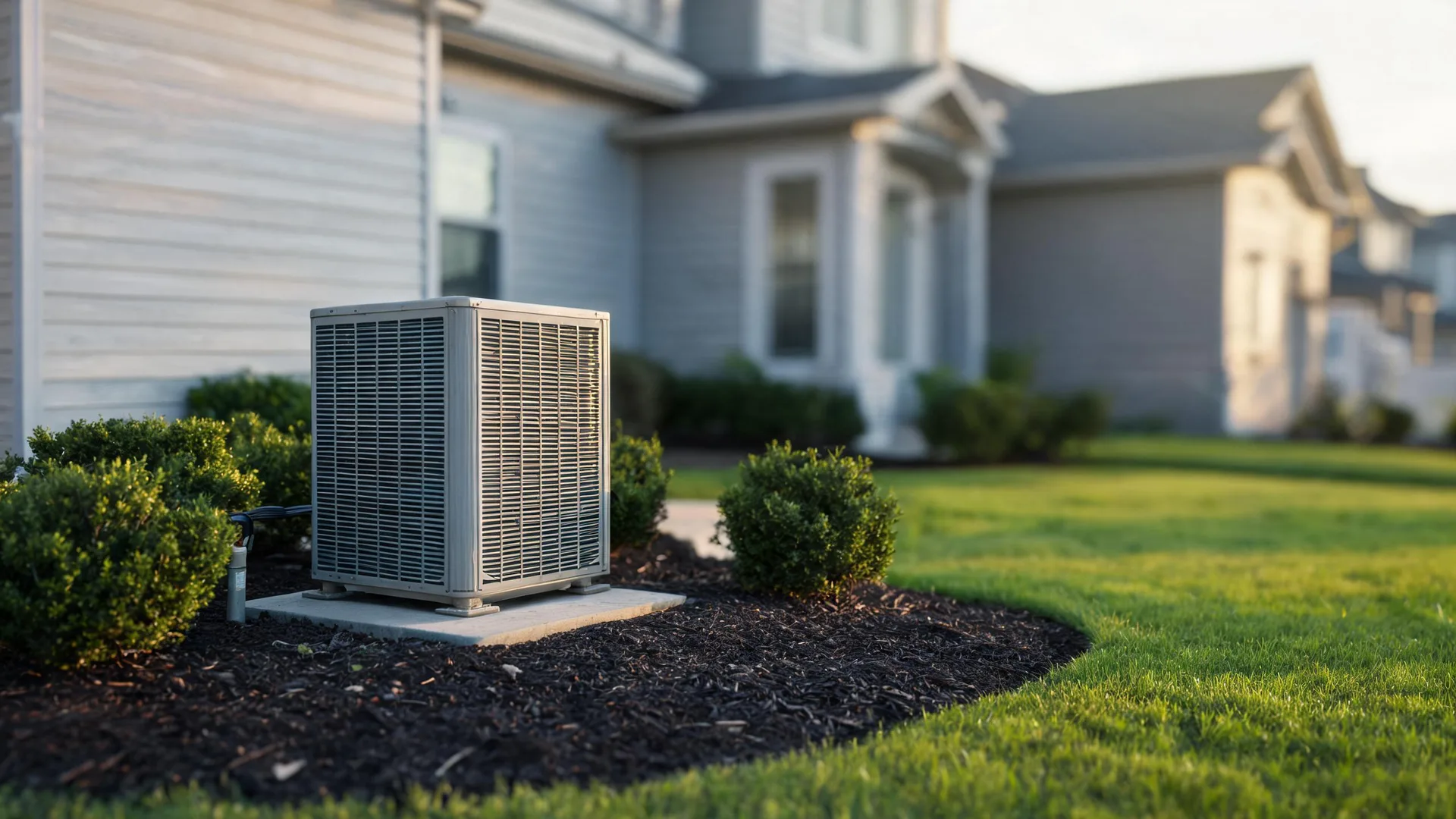
A gray outdoor HVAC unit mounted on a concrete pad beside a house with gray lap siding and a stone foundation.

A problem left running rarely stays small

A heat pump that's struggling doesn't fail all at once. It fails a little more every hour it keeps running. A weak capacitor makes the compressor draw harder on every start. That extra draw heats the windings a little more each cycle until one start it doesn't recover from. A low refrigerant charge lets the compressor run hotter than it's built to, and the longer it runs that way, the more it cooks the oil that's supposed to protect it. Ice on the outdoor coil is the same story from a different angle. A little ice blocks airflow, which drops performance, which lets more ice form, and the unit keeps running the whole time trying to keep up. None of these fix themselves by running longer. They get worse the longer the system is left to work through them, and what would have been a part swap turns into a compressor job.

What a technician checks first

A diagnostic visit starts outside, at the condenser. The technician checks refrigerant pressure, looks at the fan blade for wobble or damage, and pulls the panel to check the wiring and the capacitor. Inside, they check the air handler, the coil, and the thermostat signal. Reversing valve next, since that's what switches the system between heating and cooling and it's a common failure point in a heat pump specifically. Each check rules something out until what's left is the actual problem.
Why it's worth doing before any repair

A heat pump can throw the same symptom for different reasons. Weak heat might be a failing reversing valve, a low charge, or a defrost cycle stuck in the wrong mode, and each one calls for different work. Fixing the wrong part wastes money and leaves the real problem running. A proper diagnosis tells the technician exactly what to replace, and tells the homeowner what the repair will actually fix before they agree to it.

A few things are worth checking before anyone comes out. Look at the thermostat first, since a dead battery or a setting bumped to the wrong mode can look exactly like a broken system. Go outside and check that the condenser isn't buried in leaves, snow or anything blocking the fan. Check the circuit breaker, because a heat pump that trips once can sometimes trip again for a simple reason like a loose connection, not a failing part. Look at the air filter too. A clogged filter starves the system of airflow and can make a heat pump run constantly without ever catching up. None of this tells you what's actually wrong inside the unit, but it rules out the things that aren't worth paying a technician to find.

Age by itself does not answer the question. A system that has been serviced on schedule can still be worth repairing well into its life. One that has been neglected, coils never cleaned, filters ignored, can be already stressed in ways that show up as one failure after another. What matters more than how old the unit is is the pattern. A system that keeps coming back for different repairs is telling you something a single breakdown does not. The compressor is usually what decides the call, since it is the most expensive part and the hardest to justify replacing on its own. If the compressor is sound and what failed is a capacitor or a fan motor, that is worth fixing. If the compressor itself is what is going, that is the point to weigh a repair against starting over.