A single-story house with light siding, dark shutters and a gray shingled roof, seen across a mown lawn from a low angle with blurred grass and shrubs in the foreground and large deciduous trees behind.

Heat Pump Repair in Providence, RI

Tell us about the job

Takes about a minute. No obligation.

RepairHeat PumpProvidence County, RI
Step 1 of 2

What ZIP code is the job in?

Warm air in winter means trouble, not comfort

A heat pump in heating mode should feel warm at the vents, not cool or barely different from room temperature. Air that feels lukewarm often means the reversing valve is stuck between modes, or the system has lost refrigerant charge. Either one keeps the unit running without actually heating the house.


Ice on the outdoor unit past a normal defrost cycle

Some frost on the outdoor coil during cold weather is normal, and the system should clear it on its own through a defrost cycle. If the coil stays iced over or builds up thick frost that never melts back, the defrost control board or a sensor has likely failed, and the compressor can be damaged running that way.

8 months
October through May, your system heats
2 months
July through August, it cools
22°F
the average winter night it heats against
80°F
the average summer afternoon it cools against
Isometric cutaway illustration of a house showing interior ductwork, an indoor air handler unit, and an outdoor condenser unit beside the building.
Your system heats October through May and cools July through August.

NOAA nClimDiv, 1991–2020 normals

Heat pumps in Providence County switch over to heating in October.

September is the month to get a repair looked at, before the first cold stretch puts load on a part that was already failing.

Providence County sees its share of wind and winter storms, but none of it singles out a heat pump. When one acts up, the cause is almost always a part inside it, not the weather outside.

236 severe weather events from 2015 to 2024
12% of homes statewide lost power a day or more in 2024
161 damaging wind events from 2015 to 2024
Providence's older homesHalf the homes in Providence County were built in 1956 or earlier

Rhode Island electricity ran 28.65 cents per kilowatthour in 2024, among the highest rates in the country. A heat pump struggling to heat, short cycling, or running its backup heat more than it should eats into that cost every single day it goes unfixed. The unit doesn't need to break down completely to cost you. One stuck valve or low refrigerant charge can keep it running long hours for a room that never quite gets warm enough. That's a cost you pay all winter, not just once.

A heat pump running wrong costs you every day it stays that way

A heat pump that's struggling doesn't stop drawing power, it just runs longer to do less. At Rhode Island's electric rates, that difference shows up on the bill before it shows up as a breakdown. Get the cause found now and it stops costing you.

Find a contractor
A man in a gray long-sleeve shirt, olive pants, cap and boots walks up porch steps toward a red front door, carrying a canvas tool bag beside a potted plant in a terracotta pot.
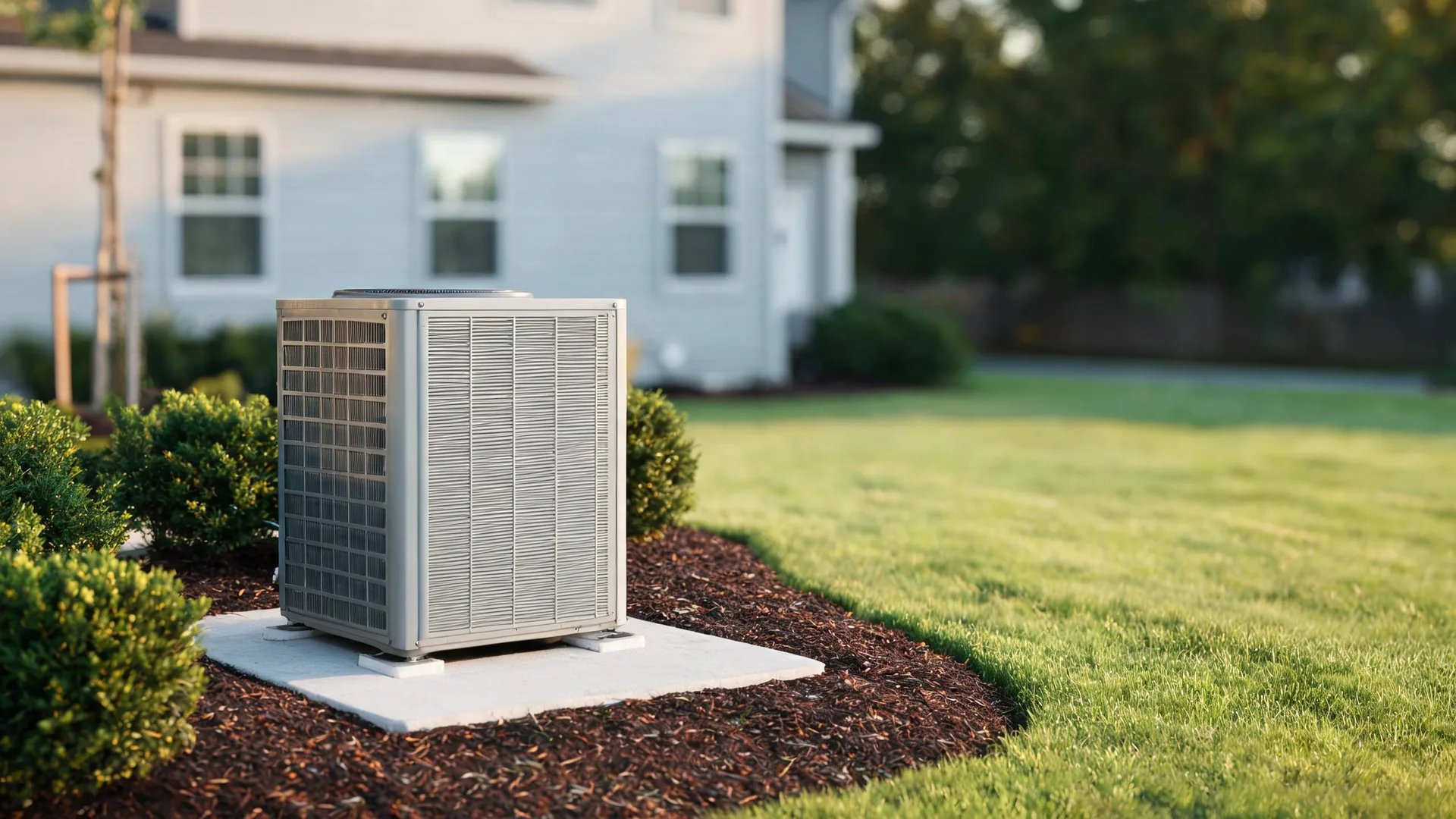
A gray heat pump outdoor unit mounted on a concrete pad next to the stone-accented exterior wall of a house.

Know what you're repairing before you pay for it

If the system in your home came with the house, ask the contractor how many years it has left before you pay for anything big. A unit that's already struggling, running long or short cycling, is worth less to repair the closer it is to the end of that life. A straight answer on age and remaining life tells you whether this repair is worth it or whether the money is better put toward replacement.

Check the thermostat settings first

Make sure the thermostat is set to heat, not auto or cool, and that the set temperature is actually above room temperature. Some thermostats have a separate emergency heat setting. If that's switched on by mistake, the system runs off backup heat alone and ignores the heat pump entirely.

Look at the filter and the outdoor unit

A clogged filter chokes airflow and can make a working heat pump feel weak at the vents. Walk outside and check that the outdoor unit isn't blocked by leaves, a fence, or anything piled against it. Airflow problems on either side show up as the same weak heat, and both are worth ruling out before assuming a part has failed.

A heat pump that's low on charge or running on a failing part doesn't rest if you leave it alone. The compressor still fires, still tries to move refrigerant that isn't there in the right amount, and it runs hotter and longer than it was built to. That wears the compressor down faster, and a compressor is the one part in the system that usually isn't worth replacing on its own. A stuck reversing valve causes the same kind of damage over time, since the system keeps cycling trying to reach a setpoint it can't hit. Catching either problem early is a repair. Catching it late is often a new outdoor unit.

A diagnostic starts with the thermostat and the readings, not with tools on the unit. A tech checks what temperature is set, what mode it's in, and what's actually coming out of the vents, then moves to the refrigerant pressures and the electrical readings at the outdoor unit. Gauges on the lines tell them if the charge is low. A clamp meter on the compressor and the fan motor tells them if either is drawing power the way it should. Only after that does the panel come off to look at the reversing valve, the defrost board, or the capacitor by eye. The visit ends with a part named, not a guess. If the tech can't point to the failed part and explain how it causes what you're feeling at the vents, the diagnosis isn't finished yet.