






A single-story house with light siding, dark shutters and a gray shingled roof, seen across a mown lawn from a low angle with blurred grass and shrubs in the foreground and large deciduous trees behind.

Heat Pump Repair in Warwick, RI

Tell us about the job

Takes about a minute. No obligation.

RepairHeat PumpKent County, RI
Step 1 of 2

What ZIP code is the job in?

October is when heat pumps in Kent County earn their keep, switching over from cooling to heat for the first time since spring. That switch is where weak parts tend to show up. A contactor or capacitor that limped through summer cooling may not survive the first real demand for heat. A refrigerant leak that was minor in August can leave a system struggling once it has to pull heat from cold outside air. If your heat pump is making noise, running constantly, or not keeping up, September is a good time to have it looked at, before the first cold snap puts real load on it.

8 months
October through May, your system heats
2 months
July through August, it cools
23°F
the average winter night it heats against
80°F
the average summer afternoon it cools against
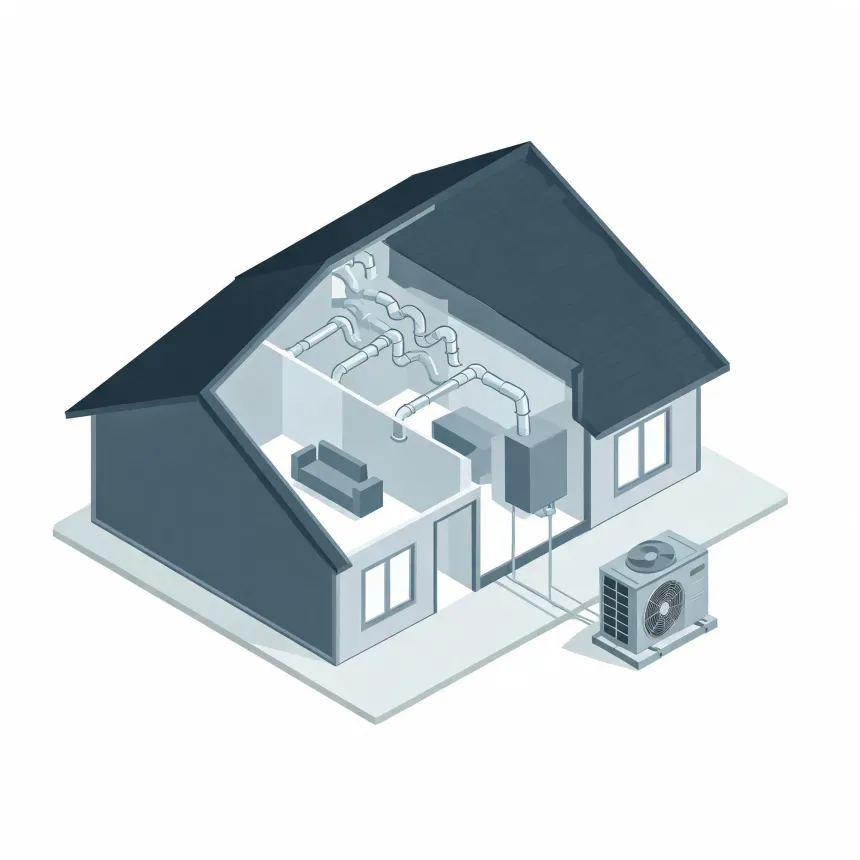
Isometric cutaway illustration of a house showing interior ductwork, an indoor air handler unit, and an outdoor condenser unit beside the building.
Your system heats October through May and cools July through August.

NOAA nClimDiv, 1991–2020 normals

A heat pump running nonstop without warming the house is working, just not keeping up.

A gap that wide between effort and output usually means the refrigerant charge needs checking, not the thermostat.

Half the homes in Kent County were built by 1967

Half the homes here were built by 1967
86 damaging wind events from 2015 to 2024
5 hail events from 2015 to 2024
A heat pump that's struggling costs you every month it runs that wayRhode Island electricity ran 28.65 cents per kilowatt-hour in 2024

Winter here is the real test for a heat pump, and it's not an extreme one. Overnight lows average 23°F across December, January and February, cold enough to make the system work, not cold enough to push it past what it's built for. Zone 5A calls for a heating-focused system, and that's what's installed. So when a heat pump in Kent County is struggling, the climate usually isn't why. More often it's a part that's worn out or a charge that's drifted low, not a machine being asked to do something it can't. That makes most repairs worth doing. You're not fighting the house or the weather, just fixing what's actually broken.

If your heat pump dates back to the house, find out what it has left

A system installed with an older home is more likely to be near the end of its working life. Before paying for a big repair, get a straight answer on how many years are left in it.

Find a contractor
A man in a gray long-sleeve shirt, olive pants, cap and boots walks up porch steps toward a red front door, carrying a canvas tool bag beside a potted plant in a terracotta pot.
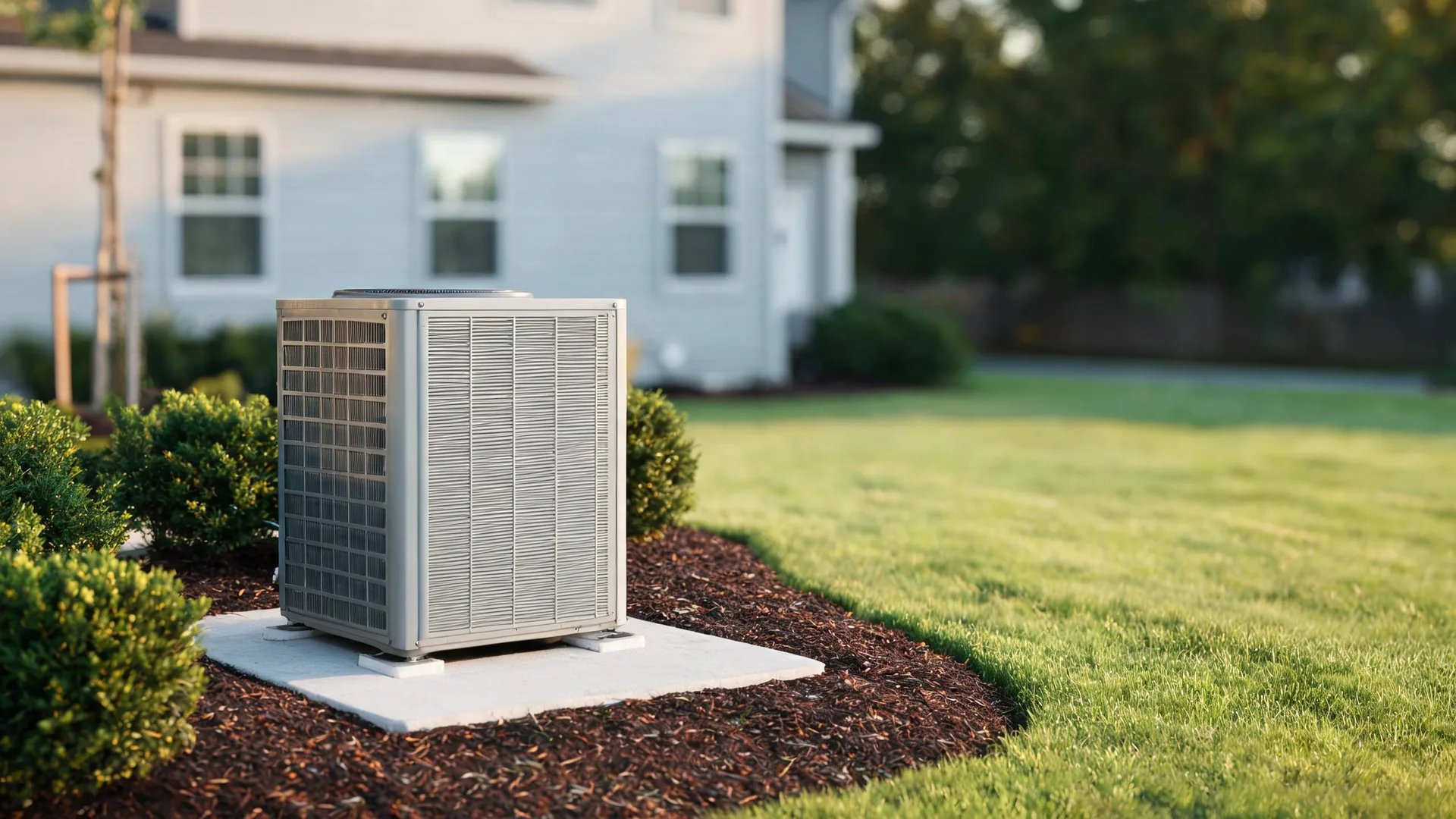
A gray heat pump outdoor unit mounted on a concrete pad next to the stone-accented exterior wall of a house.

What a diagnostic actually checks

A diagnostic starts outside at the unit itself. The tech hooks up gauges and checks refrigerant pressure on both the high and low side. That reading tells them whether the charge is low, overfull, or right where it should be, and each of those points to a different problem. They also check the temperature of the air going into the system against the air coming out of it. That split says whether the unit is actually moving heat or just running without doing much. The capacitor gets tested under load, not just looked at, because a weak one can look fine sitting still and still fail to start the compressor. The reversing valve gets checked too, since a valve stuck partway can make a heat pump blow cold air while it's set to heat, with no error telling you why. Indoors, the tech checks airflow at the vents and looks at the coil for ice or a layer of dust holding heat back. None of this is guesswork. Each reading rules something out or points at what's actually failing, and by the end the tech should be able to name the part, not just say something's wrong.

A low charge gets worse on its own

A refrigerant leak doesn't hold steady. The compressor keeps pulling the same amount of refrigerant through the system, and if it's leaking out, there's less of it every day the unit runs. Running low on charge for weeks means the compressor works harder that whole time, not just at the end when it finally quits.
A failing part puts load on the part next to it

A weak capacitor makes the compressor draw harder to start. A dirty coil makes it work longer to move the same heat. Either one, left alone, pushes wear onto the compressor itself. Catching the capacitor or the coil early keeps that wear from reaching it.

Before anyone comes out, there's a few things worth checking yourself. Look at the outdoor unit first. If the coil is packed with leaves or the cabinet is iced over with the system running in heat mode, that's worth a photo and a mention when you call. Check the thermostat is actually set to heat and the temperature is set above room temperature, not just display lit up. Walk around and check your air filter if you can get to it easily, a clogged filter chokes airflow and makes the whole system work harder than it should. Check that indoor vents aren't closed or blocked by furniture. If the system is running but the air coming out doesn't feel warm, don't keep running it hoping it catches up. That's not a thermostat problem, and the longer it runs that way the harder the compressor works.

Most heat pump failures trace back to a handful of causes, and they're not exotic. Dirty coils are the most common, outside and in. When the outdoor coil is caked with debris or the indoor coil is coated in dust, the system can't move heat the way it's supposed to, so it runs longer and harder to do the same job. Low refrigerant charge is next, almost always from a slow leak rather than the system just running out. A failing capacitor or contactor causes a lot of the no-heat calls, since those are the parts that wear from simple repetition, switching on and off every cycle for years. Electrical connections loosen over time from vibration, and a loose wire at the contactor or the board can cause intermittent problems that look like something bigger than they are. The compressor itself rarely fails on its own. It usually fails because one of these smaller problems went unaddressed long enough to put real strain on it.