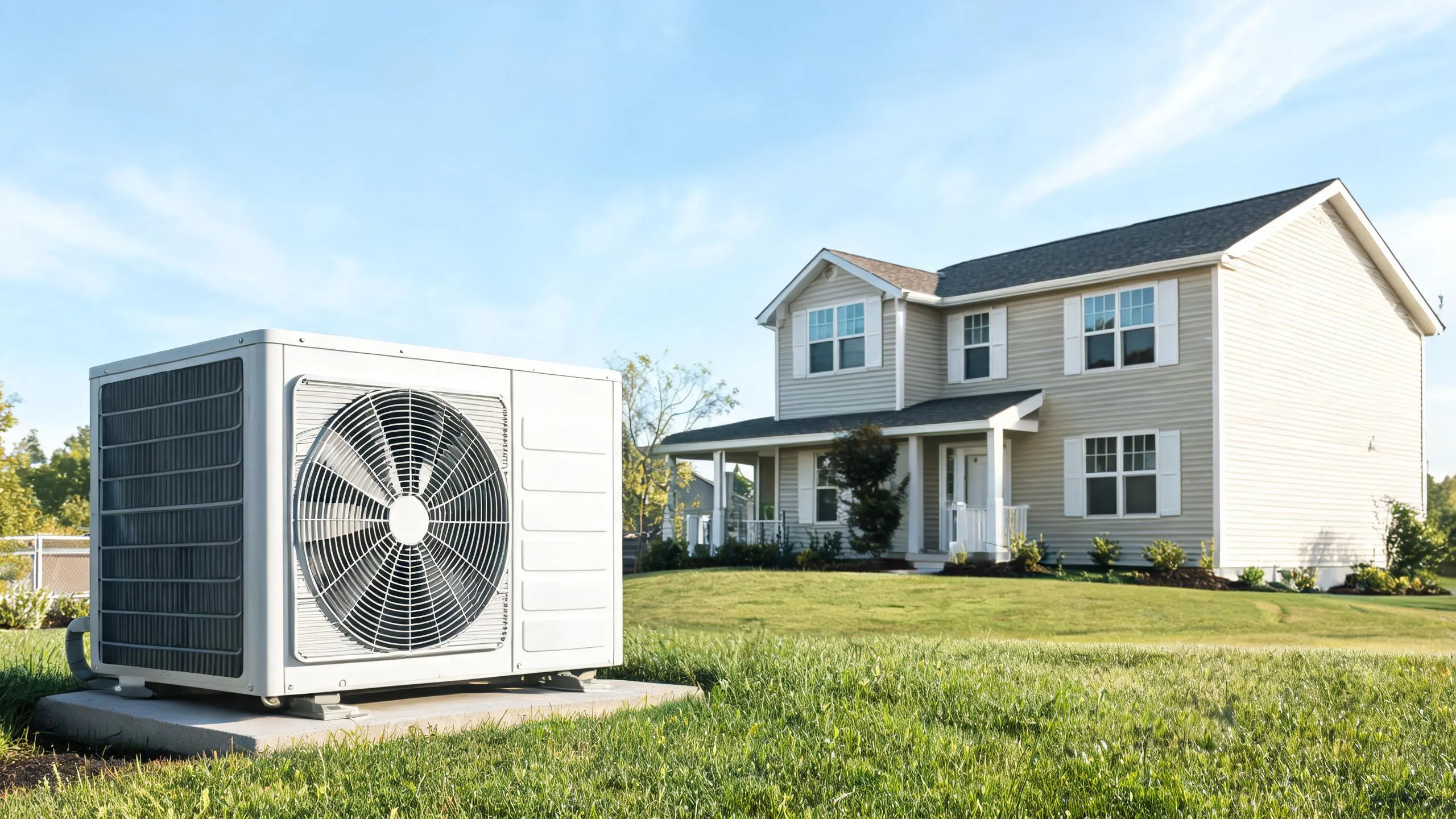






An outdoor heat pump unit mounted on a concrete pad in front of a two-story suburban house.

Heat Pump Repair in Westerly, RI

Tell us about the job

Takes about a minute. No obligation.

RepairHeat PumpWashington County, RI
Step 1 of 2

What ZIP code is the job in?

Heat pumps here work hardest right at the start of October, when the switch to heat first asks a lot of the system. That's when a weak part finally gives out. A capacitor that was marginal all summer can't push the compressor through the change. A reversing valve that was sticking quietly starts sticking badly. If your heat pump is struggling now, there's a good chance it's been building toward this since before the weather turned. Getting it looked at early, rather than waiting through a cold snap, usually means less damage to the rest of the system.

8 months
October through May, your system heats
2 months
July through August, it cools
24°F
the average winter night it heats against
79°F
the average summer afternoon it cools against
Isometric grey-toned illustration of a cutaway house showing interior rooms, ceiling ductwork and an air handler, connected by lines to an outdoor condenser unit beside the building.
Your system heats October through May and cools July through August.

NOAA nClimDiv, 1991–2020 normals

Winter lows average 24°F here, cold but not extreme, and zone 5A puts the heating load above the cooling load.

A heat pump in Westerly isn't fighting brutal cold year after year, so when it's struggling, that's worth tracking down and fixing rather than writing off.

Westerly sees its share of storms, but that's not what's wearing on your heat pump

166 severe weather events from 2015 to 2024
12% of homes statewide lost power a day or more in 2024
111 damaging wind events from 2015 to 2024

Half the homes in Washington County were built in 1977 or earlier, half later, and a heat pump doesn't care which one yours is. The age of the house isn't what decides whether this is a simple repair. What matters is the age and condition of the heat pump itself, and whether it came with the house or was added on later. A unit that's been running fine for years and suddenly acts up is usually one worn part away from working right again. Ask whoever comes out what's actually failing, not just what it takes to fix it.

A heat pump running wrong costs you more here than almost anywhere

Rhode Island electricity runs 28.65 cents per kilowatt-hour, among the higher rates anywhere. A heat pump with a weak capacitor or a sticking reversing valve draws more just to do its job, and you pay that rate every time it runs. Getting the real problem fixed stops that drain.

Find a contractor
A man in a gray long-sleeve shirt, olive pants, cap and boots walks up porch steps toward a red front door, carrying a canvas tool bag beside a potted plant in a terracotta pot.
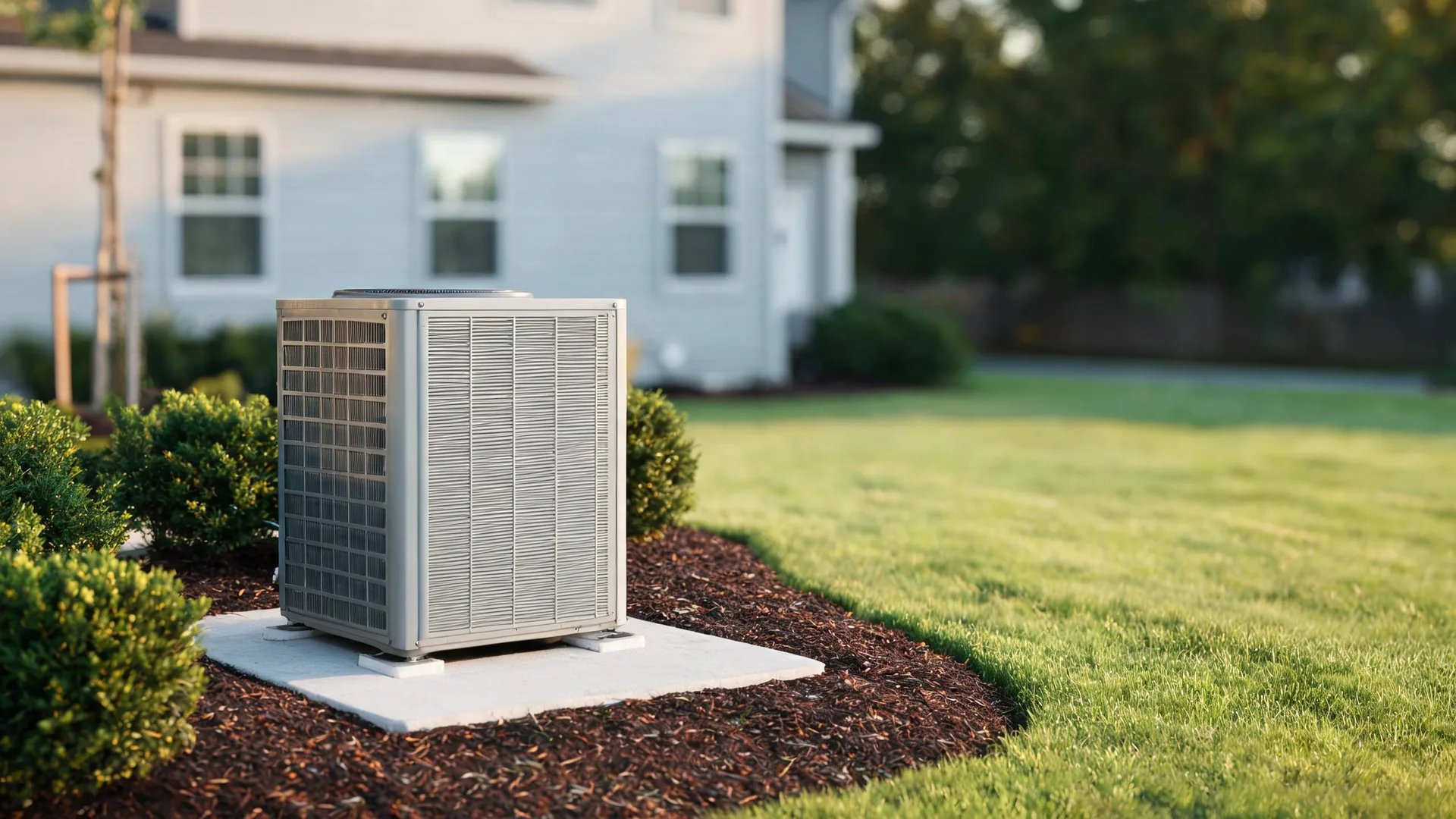
A gray heat pump outdoor unit mounted on a concrete pad next to the stone-accented exterior wall of a house.

Worth fixing, most years

The day-into-night clip shows what this unit actually does across a single day, not what a bad week looks like. Call for a repair first, before a replacement quote. A worn capacitor or a sticking reversing valve is a straightforward fix on a unit that hasn't had to fight brutal cold for years. Ask the contractor what part failed before you ask what it would take to replace the whole system.

A small fault pulls in more current

A compressor that's struggling to start draws harder every time it tries. That extra draw heats the windings each cycle, and enough heat over enough cycles shorts the compressor out. A part you could have replaced turns into a unit you have to.
A refrigerant leak only grows

A heat pump low on charge doesn't fix itself by running. The compressor keeps pulling toward a charge that isn't there, and the leak that caused it keeps leaking. Catch it early and it's a repaired line and a recharge. Wait, and the compressor can go with it.

A heat pump fails the same handful of ways no matter whose yard it sits in. The capacitor is the usual one. It gives the compressor and fan motor the push they need to start, and it weakens slowly, so the system runs a little worse each week before it quits outright. The reversing valve is the other common one, since it's the part that switches the unit between heating and cooling, and a valve that sticks will leave you with heat that won't shut off or won't turn on at all. Low refrigerant almost always means a leak somewhere in the line, not the system burning charge through use. A failed run capacitor or a dirty outdoor coil will make the compressor strain to start, and a compressor that strains on every cycle is the one part on this unit you don't want to lose.

Most of the time, replacing a heat pump outright is a bigger step than the problem calls for. A compressor is the one part that ends the conversation, since it isn't something a contractor swaps out on its own. Everything else, the capacitor, the reversing valve, the fan motor, the control board, gets replaced individually and the unit runs like it did before. What decides repair versus replacement is usually whether the compressor is still good. If it is, you're paying for a part, not a system. A contractor can tell you straight off whether the compressor is drawing current the way it should, and that answer matters more than how the unit looks or how old the thermostat is.