






Two white multi-story colonial houses with lit windows and black shutters photographed at night, fronted by a stone wall.

AC Installation in Westerly, RI

Tell us about the job

Takes about a minute. No obligation.

New system or replacementCentral ACWashington County, RI
Step 1 of 2

What ZIP code is the job in?

Electricity in Rhode Island runs 28.65 cents per kilowatthour, one of the higher rates in the country. An air conditioner here is going to run on that rate for as long as you own it, so the efficiency rating on the new system matters more than it would somewhere power is cheap. Two units can cool a house the same way and still cost differently to run, month after month, just based on that number. Worth asking what SEER2 rating you're being quoted before you decide.

2 months
July through August, your air conditioner is on duty
79°F
the average summer afternoon it cools against
12 hail events
in ten years, and hail bends the fins on outdoor coils
13.4 SEER2
the federal minimum any new unit must meet
Isometric cutaway illustration of a house interior showing ducted HVAC piping, an indoor air handler unit, and an outdoor condenser with fan connected by a line, rendered in grey tones on a white background.
Your air conditioner works hardest from July through August.

NOAA nClimDiv, 1991–2020 normals

Westerly summers only ask for two months of cooling, July and August.

A system that short on duty doesn't need to be the top-tier model to hold up.

Two months of cooling, so June is when you want this done

Cooling runs July through August
Summer afternoons average 79°F
111 damaging wind events from 2015 to 2024
What It Costs To RunAt 28.65 cents per kilowatthour, the SEER2 rating on the new unit is worth getting right

Half the homes in Washington County were built in 1977 or earlier, half in 1977 or later. That split doesn't tell a contractor what size AC your house needs. Sizing comes down to the square footage and layout of your particular house, not when the neighborhood went up. A contractor still has to measure the rooms, check the windows and insulation, and run the numbers before quoting a size. Older or newer, a standard system sized to the house and matched to a reasonable SEER2 rating is what you're after here, nothing bigger or pricier than that.

Heat here mostly runs on oil, so your AC stands alone

Most homes in Washington County heat with fuel oil or kerosene, not electricity. If that's your setup, central air runs on its own separate system from your furnace, which is one more reason to get the sizing and installation right the first time instead of working around it later.

Find a contractor
A gray cylindrical air conditioning condenser unit mounted on a concrete pad next to a light-colored vinyl-sided house exterior.

Two months of work a year

July and August, afternoon highs averaging 79 degrees. That's the stretch this system has to cover. Once it's sized right for the house, a standard unit with a mid-range SEER2 rating gets through those two months fine. No need to pay for a top-tier compressor built to run most of the year.

Ask what size they're putting in, and why

A contractor should be able to tell you the load calculation behind the number, not just a tonnage they settled on. If the answer is based on square footage alone, or matches whatever was there before, that's not a real sizing job. A unit sized too big cools the air fast but shuts off before it pulls the moisture out, so the house feels damp. One sized too small runs constantly and never quite catches up on the hottest days.

Ask what happens to the ductwork

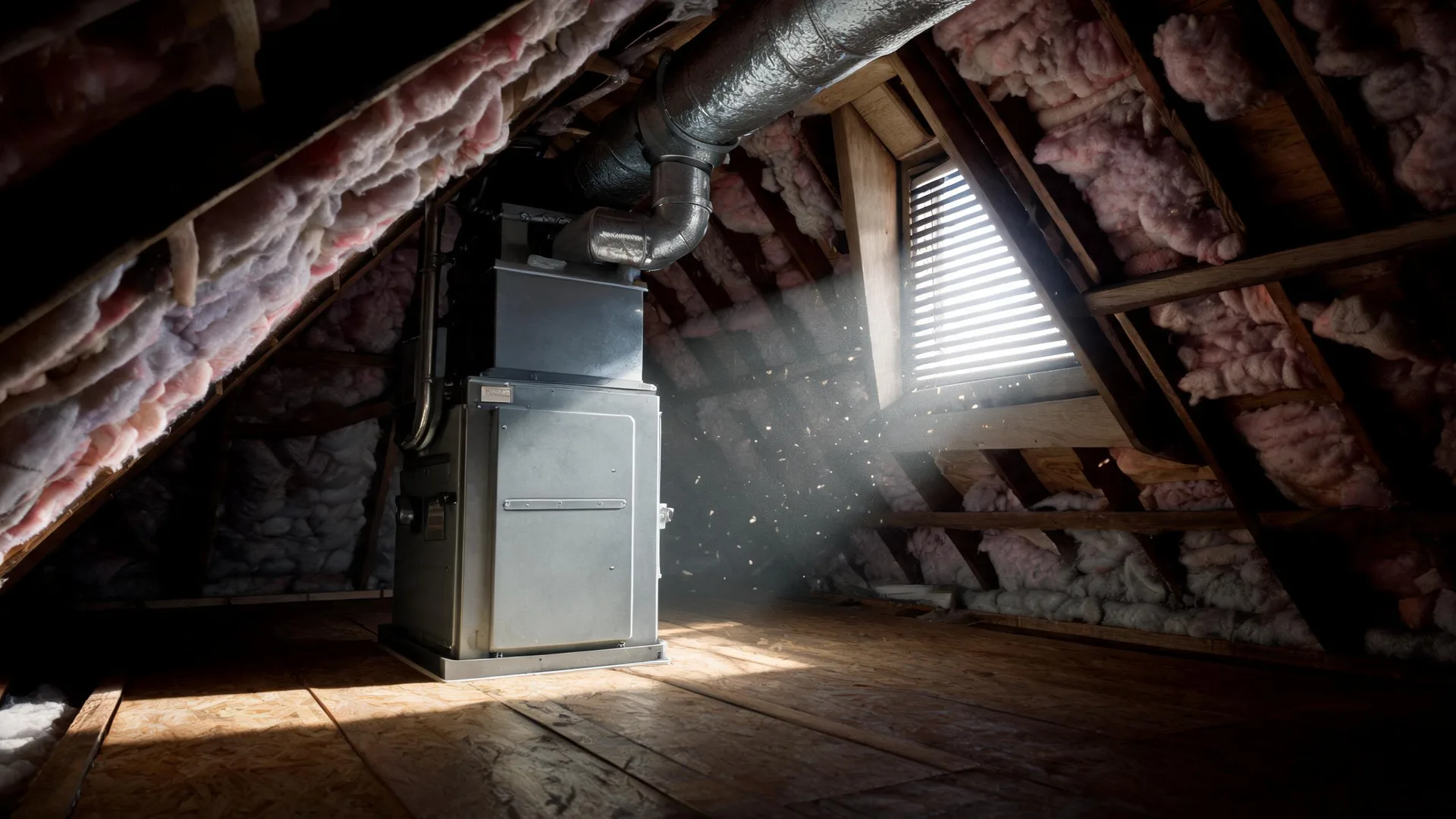
A new outdoor unit paired with old ductwork can still underperform if the ducts weren't sized for it or have leaks along the way. Ask whether the ducts get inspected as part of the job, not just the equipment swapped. The condenser and air handler are only part of the system. Air still has to get from the unit to the rooms, and that part is just as easy to get wrong.

Overhead view of a gray outdoor AC condenser unit on a concrete pad beside a mulched garden bed and a house with vinyl siding.

A higher-efficiency unit would save about $30 a year to run in Washington County compared with a new unit at the federal minimum.

  • A higher-efficiency unit$270 a year
  • A new unit at the federal minimum, 13.4 SEER2$300 a year

Estimates for a typical Washington County home, from EIA household energy data, Rhode Island fuel prices and NOAA climate normals. Your home will differ.

The old system comes out first. Refrigerant gets recovered into a tank, never released into the air. That part is fast. What takes longer is setting the new equipment correctly, mounting the outdoor unit on a level pad, running new line set if the old lines do not match what the new system needs. Once everything is connected, a tech pressure tests the lines for leaks before any refrigerant goes in. Then the lines get evacuated to pull out moisture and air, since either one left behind will damage the compressor over time. Charging the system comes after that, done to the manufacturer's spec rather than guessed at. Only once it is running does anyone check airflow at the vents and confirm the thermostat is reading the new equipment correctly.