






A row of white Colonial-style houses with glowing windows photographed at dusk along a road bordered by a stone wall.

Mini Split Installation in Providence, RI

Tell us about the job

Takes about a minute. No obligation.

New system or replacementMini-splitProvidence County, RI
Step 1 of 2

What ZIP code is the job in?

Rhode Island electricity ran 28.65 cents per kilowatthour in 2024, among the higher rates in the country. A mini split runs on electricity, nothing else, so every degree of efficiency it has or doesn't have shows up on your bill month after month. This is where SEER2 and HSPF2 ratings matter more than they would somewhere with cheap power. A unit a few points higher in efficiency costs more to install but draws less to do the same job, and in Providence that gap doesn't stay small for long. Ask what rating a system carries before you ask what it costs to put in.

8 months
October through May, your system heats
2 months
July through August, it cools
22°F
the average winter night it heats against
80°F
the average summer afternoon it cools against
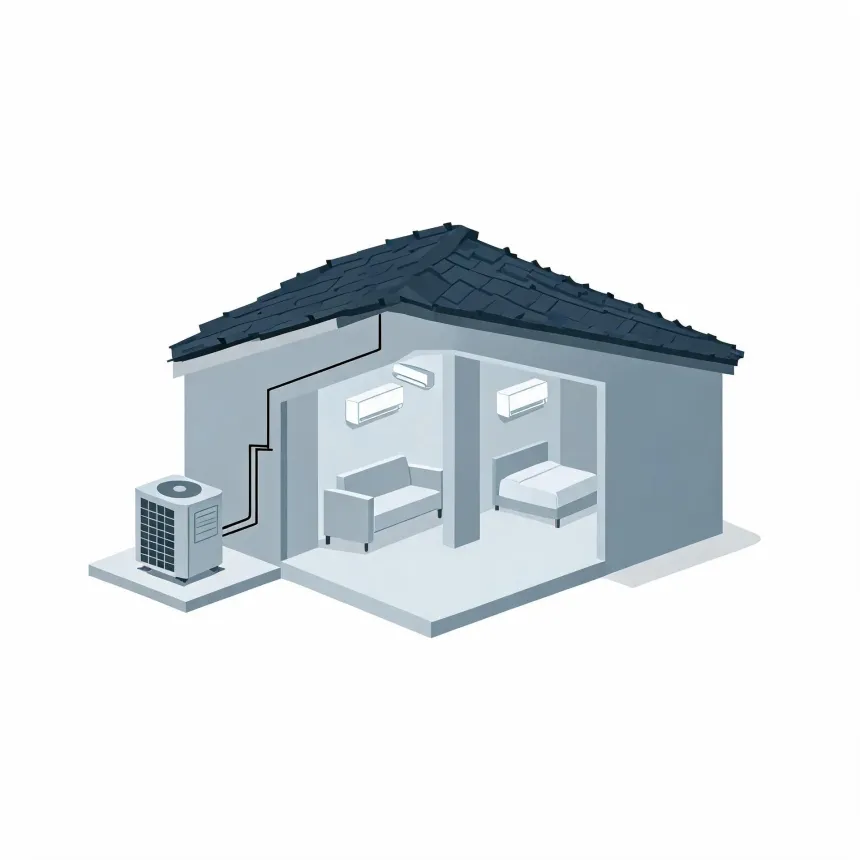
Isometric illustration of a cutaway single-story house with a dark shingled roof, showing three wall-mounted indoor air conditioning units in two rooms connected by lines to an outdoor condenser unit on a pad outside.
Your system heats October through May and cools July through August.

NOAA nClimDiv, 1991–2020 normals

Providence County logged 236 severe weather events between 2015 and 2024, most of them wind and winter storms.

A standard mini split handles that fine. Nothing about this county calls for oversizing the system or paying for a higher tier than your home needs.

Half these homes were built in 1956 or earlier. A mini split still has to match the one you've got.

Half the homes here were built by 1956
Cooling runs July through August
Summer afternoons average 80°F
A mild load most of the yearCooling runs about two months a year here, July and August.

Most homes in Providence County heat with gas, 60.9 percent of them. Electricity is a distant second at 13.4 percent, with fuel oil covering another 19.9 percent. That matters for a mini split because the system handles cooling and, in many installs, a share of the heating load, but it rarely replaces a gas or oil furnace outright. If your home is part of that gas majority, the furnace keeps running on the coldest days and the mini split takes over shoulder season and summer. Ask whoever quotes the job whether they're proposing the mini split as your only heat source or as one that works alongside what you've already got.

Get it in before July

Cooling in Providence runs July through August. June is when an install stops being urgent and starts being a choice, with the system in place and tested before the first hot stretch hits.

Find a contractor
A man in a cap, dark shirt and tan cargo pants, seen from behind, climbs porch steps toward a red front door while carrying a worn canvas duffel bag, with a potted shrub in a red planter beside him.
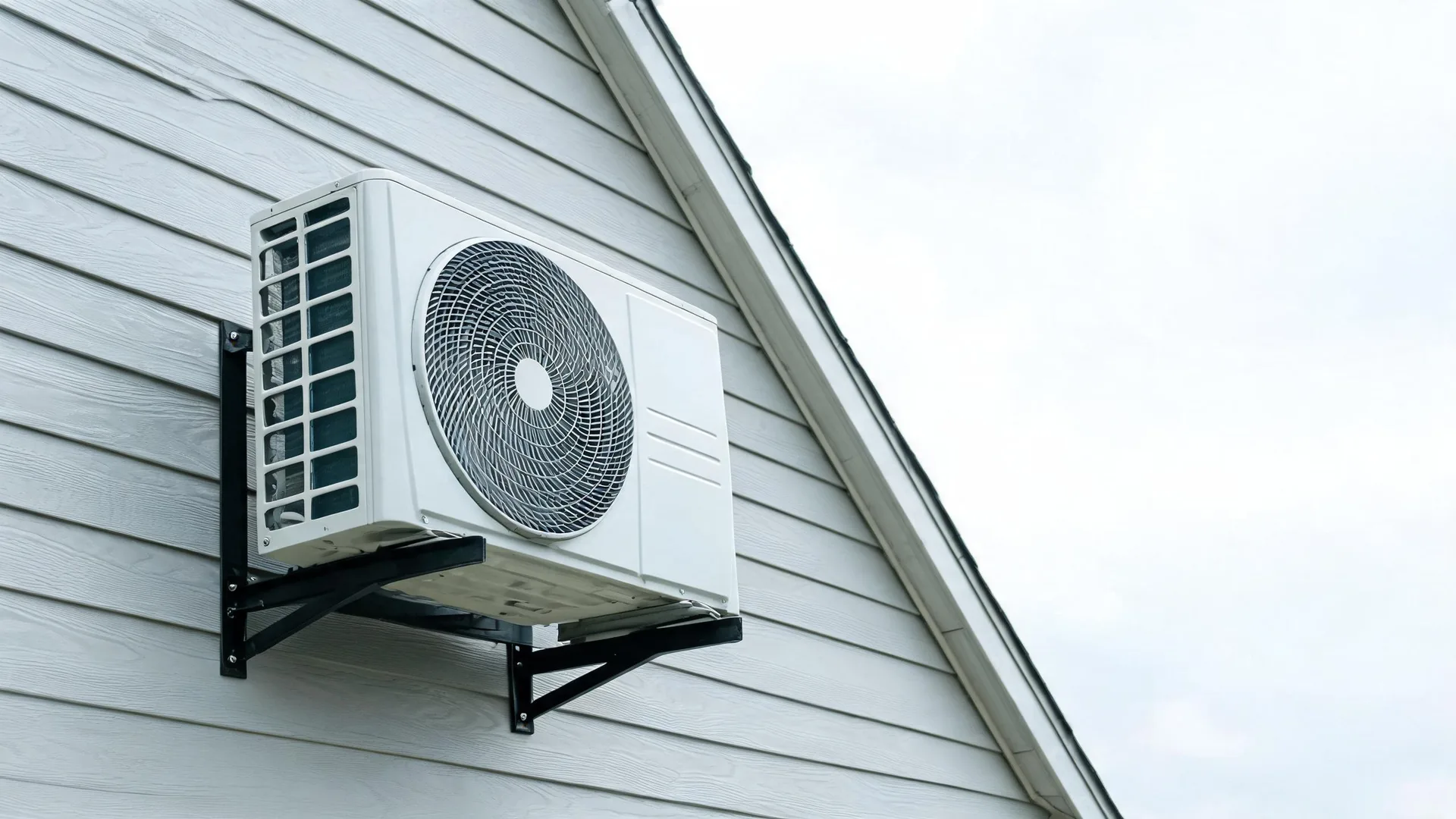
A white mini-split air conditioner outdoor condenser unit mounted on metal brackets against a beige stucco exterior wall, with a blue sky and scattered clouds in the background.

The install has to work around the house you have

Half the homes in Providence County went up in 1956 or earlier. Line sets have to run somewhere in a house that age, usually along baseboards or through a closet, and the path depends on how that particular house was framed. There's no standard route that works for every one of them. Walk the rooms with whoever quotes the job and point out where you'd actually accept a line set or an indoor head before they spec the system.

The old system doesn't have to go anywhere

If you're adding a mini split alongside a gas furnace or boiler, that system stays right where it is. The mini split takes over cooling and some of the heating load, the furnace keeps the gas lines and ductwork it already has. Nothing about installing one requires pulling out the other.
A straight swap is a different job

Replacing an old central air condenser or a window unit setup with a mini split means the old equipment gets disconnected and hauled off, the refrigerant recovered properly rather than vented. If the old system used ductwork the mini split won't need, that ductwork can stay for the furnace or just get capped. Whoever quotes the job should tell you which parts of the old setup are coming out and which are staying put.

Sizing a mini split comes down to a room by room heat loss and heat gain calculation, not square footage alone. A contractor worth hiring measures the walls, counts the windows, checks the insulation and figures out how much heat that specific room loses in winter and gains in summer. Skip that step and guess instead, and the unit either short cycles or never quite catches up. Too big and the system cools the room fast, shuts off before it pulls the moisture out of the air, then kicks back on a few minutes later. That start stop pattern wears on the compressor and leaves the room feeling clammy even though the thermostat says it's satisfied. Too small and it runs constantly, flat out, and still can't hold the temperature on the hardest days. The right size is the one that runs long, steady cycles and matches what that room actually needs, nothing more.

The equipment itself is only part of what you're paying for. The outdoor compressor and the indoor head are a fixed cost, but the labor between them moves depending on the job. How far the line set has to travel, how many walls or floors it has to pass through, whether the electrical panel can take the new circuit or needs an upgrade, all of that is labor, not hardware. A single zone feeding one room is a shorter job than a multi zone system feeding several, since each additional indoor head means another line set run and another spot on the outdoor unit's capacity. Where the outdoor unit can sit matters too. A condenser with an easy path to the wall penetration costs less to hang than one that has to go on a bracket or get moved away from a window. None of this shows up until someone walks the house and sees what the crew is actually working with.