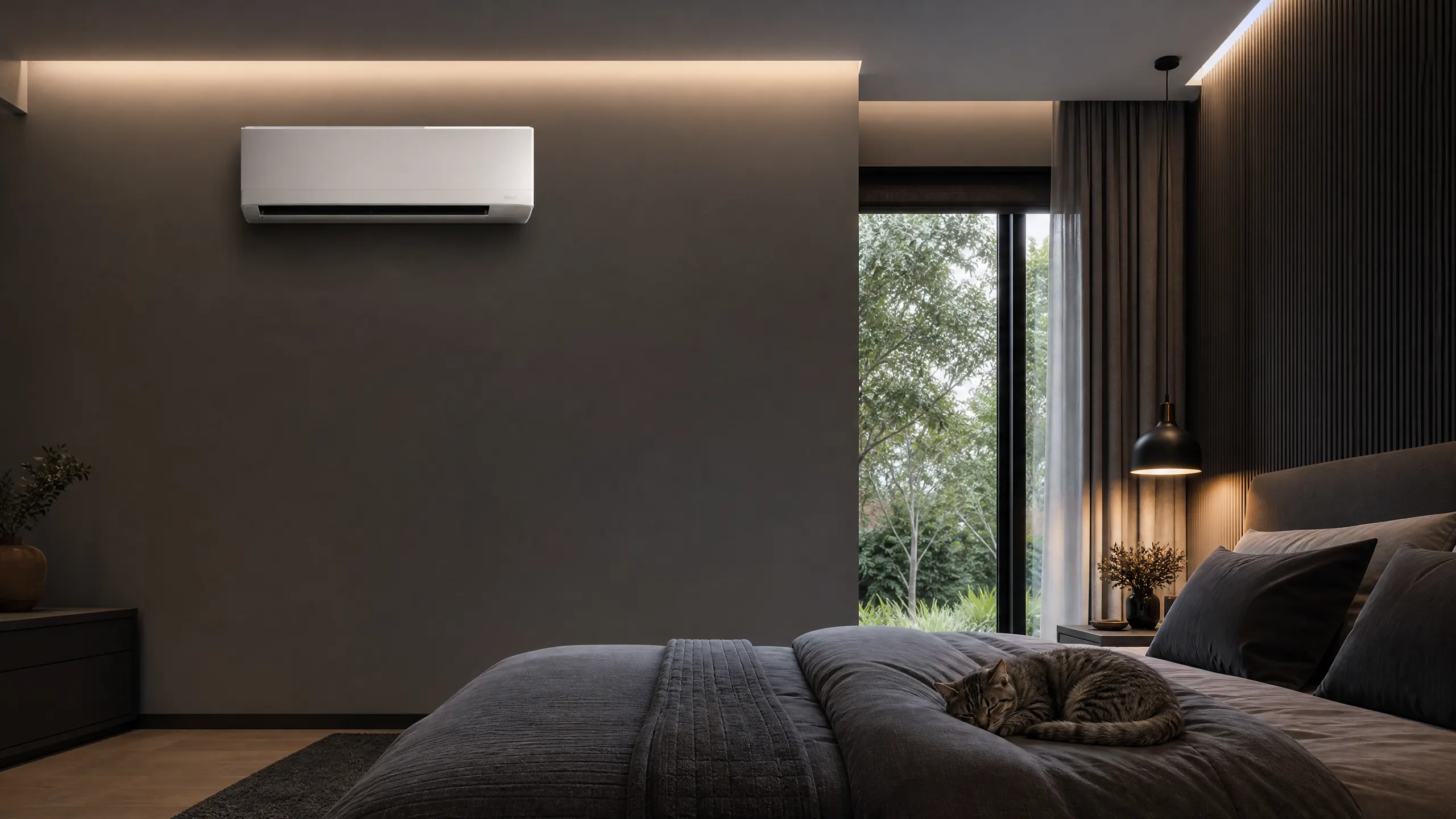





A tabby cat sleeps curled up on a dark grey bed in a modern bedroom equipped with a wall-mounted air conditioning unit.

Mini Split Installation in Warwick, RI

Tell us about the job

Takes about a minute. No obligation.

New system or replacementMini-splitKent County, RI
Step 1 of 2

What ZIP code is the job in?

Rhode Island electricity ran 28.65 cents per kilowatt-hour in 2024, among the higher rates in the country. A mini split's efficiency matters more here than it would somewhere power is cheap. The difference between one unit and another shows up on every bill, not just the first one. Look at the SEER2 and HSPF2 numbers on anything you're considering, since those tell you how much electricity it takes to move the heat in or out. A unit sized wrong for the room, too big or too small, loses you some of that efficiency no matter what the rating says.

8 months
October through May, your system heats
2 months
July through August, it cools
23°F
the average winter night it heats against
80°F
the average summer afternoon it cools against
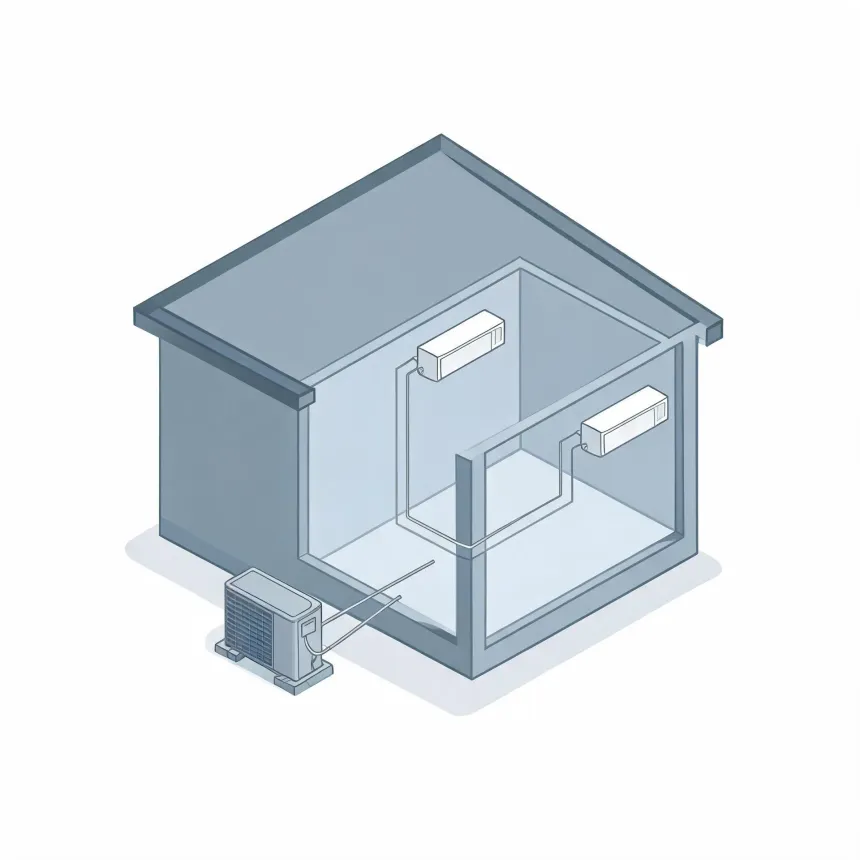
Isometric line illustration of a cutaway building interior with two wall-mounted indoor air conditioning units connected by piping to an outdoor condenser unit on the ground outside.
Your system heats October through May and cools July through August.

NOAA nClimDiv, 1991–2020 normals

Cooling runs July through August here, just two months a year.

June is when to get a mini split installed, before that first hot month hits.

Most homes here heat with gas, and oil runs second

50.4% of homes heat with gas
Cooling runs July through August
Summer afternoons average 80°F

Half the homes in Kent County were built in 1967 or earlier. A mini split going into a house that age is going into rooms that weren't designed around it. Wall framing, window placement, where the old ductwork runs if there is any, all of it was settled decades before anyone thought about a condenser and a line set. That doesn't rule anything out. It just means the unit has to be sized and placed for the rooms as they actually are, not for a standard layout. A head mounted on the wrong wall of an old room can leave a corner that never quite cools.

Efficiency pays here

Power costs more here, so an efficient system pays you back on every bill.

Find a contractor
A man in a dark beanie, navy long-sleeve shirt and tan work pants climbs porch steps toward a red front door, carrying a waxed canvas tool bag in his right hand.
A white outdoor air conditioner condenser unit mounted on metal wall brackets against gray horizontal siding, with a blue sky and white clouds behind it.

Let the rooms set the size, not the catalog

A load calculation before anything goes on the wall tells the installer what your rooms need, not what a standard layout would need. That matters more in a house from 1967 or earlier, where room sizes and window placement were never standardized the way they are now. Get the walk-through before you get a quote on equipment.

One number for cooling, another for heating

SEER2 tells you how the unit cools, HSPF2 tells you how it heats. A mini split can be strong on one and only average on the other, so check both ratings if the system has to carry real heating load and not just summer cooling.

The rating assumes a correct install

The label number comes from lab conditions, with the refrigerant charge exact and the unit matched to the room. A line set that runs too long, a charge that's off, or a head mounted where it fights the room's airflow will all pull the real efficiency below what the label promised.

Sizing a mini split starts with heat loss and heat gain, not the square footage printed on a listing. An installer works out how much heat a room loses on the coldest stretch and how much it gains on the hottest, using the window area, the ceiling height, how many exterior walls it has. That number, not the room's dimensions, is what the head has to be able to move. Go too small and the unit runs flat out without ever catching up, cycling the compressor hard and still leaving the room short. Go too big and it cools the air fast, shuts off, and leaves the room clammy, because it never runs long enough to pull moisture out along with the heat. The right size is the one that runs long, steady stretches at partial output, not the one that blasts and stops.

An installer runs a line set from the outdoor condenser to each indoor head, then wraps it in insulation before it goes through the wall. That wall penetration is a single small hole, usually behind where the head will hang, so the hole gets patched and painted at the end rather than left as a job for someone else. The line set carries refrigerant lines, a condensate drain, and electrical in one bundle, and once it's run the installer pulls a vacuum on the system to clear out air and moisture before any refrigerant moves through it. A mount goes up first, the head hangs on it, and the outdoor unit sits on a pad or bracket with enough clearance around it to pull air through the coil. Once everything is connected, the installer charges the line with refrigerant, checks it against what the manufacturer specifies for that line length, and runs the system in both heating and cooling before calling it done. A longer line run or a second or third indoor head adds time, since each one needs its own run, its own vacuum, and its own check against the charge.