





A row of white Colonial-style houses with glowing windows photographed at dusk along a road bordered by a stone wall.

Mini Split Installation in Westerly, RI

Tell us about the job

Takes about a minute. No obligation.

New system or replacementMini-splitWashington County, RI
Step 1 of 2

What ZIP code is the job in?

Electricity in Rhode Island ran 28.65 cents per kilowatthour in 2024, well above what most of the country pays. A mini split works in your favor here because it moves heat instead of burning fuel to make it, so it gets more warmth or cooling out of every watt than a baseboard heater or a window AC can. The efficiency rating on the unit matters more in a state with rates like these, since the gap between a mid-range system and a high-efficiency one shows up on every bill, all year. Zoning helps too. You can heat or cool the rooms in use and leave the rest alone, instead of paying to condition a whole house through a single thermostat.

8 months
October through May, your system heats
2 months
July through August, it cools
24°F
the average winter night it heats against
79°F
the average summer afternoon it cools against
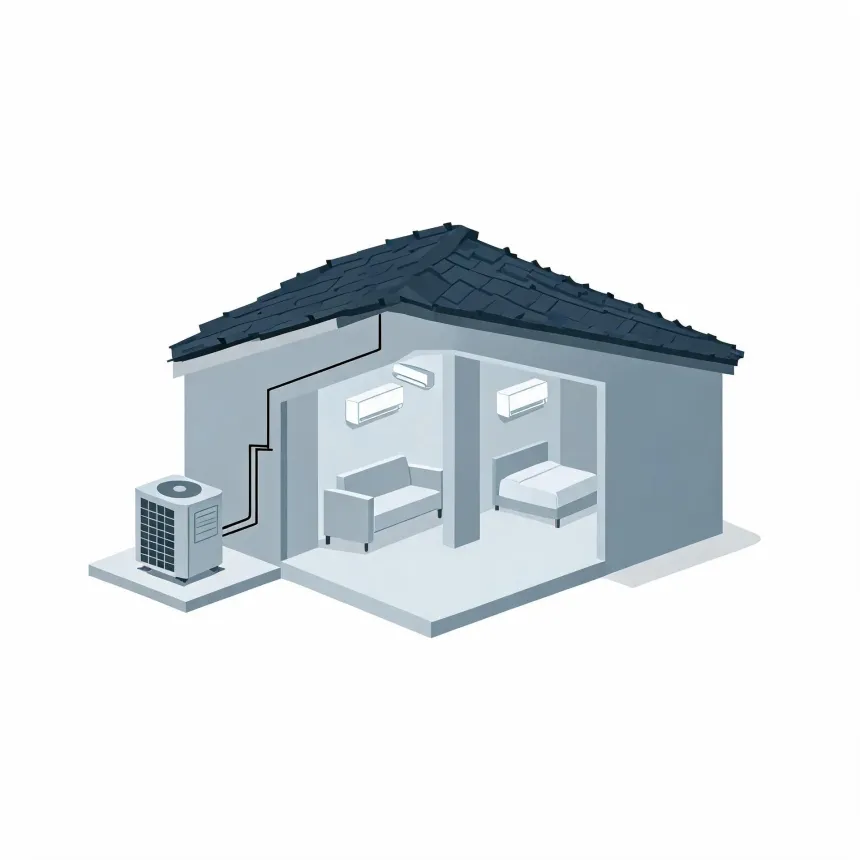
Isometric illustration of a cutaway single-story house with a dark shingled roof, showing three wall-mounted indoor air conditioning units in two rooms connected by lines to an outdoor condenser unit on a pad outside.
Your system heats October through May and cools July through August.

NOAA nClimDiv, 1991–2020 normals

Washington County gets its share of wind, ice and the occasional hurricane remnant.

None of that changes what size or tier mini split your home needs. Standard specs hold up fine here.

Most homes here run on oil, which is exactly why a mini split changes the math

40.5% of homes heat with fuel oil
Cooling runs July through August
Summer afternoons average 79°F

Cooling here only runs from July through August, so June is the month to get a mini split installed, not mid-July when the first heat wave hits. Installers get backed up once the weather turns, and a system put in under pressure gets less attention than one put in on a slow week. Getting it done in June also means it's tested and running before you actually need it, so if something needs adjusting, there's time to do that before the two months you're counting on it most.

A mini split here won't work hard, so it doesn't need to be the top model to hold up

Cooling here only has to carry two months a year, July and August, with afternoon highs around 79 degrees. That's a light load for a mini split to handle, nowhere near what the same unit would face in a hotter state. A system here is more likely to need attention because of its age or because it went unserviced than because it was run hard. That's a case for a solid, well-matched system rather than the top-tier model, with the install done right.

Find a contractor
A man in a cap, dark shirt and tan cargo pants, seen from behind, climbs porch steps toward a red front door while carrying a worn canvas duffel bag, with a potted shrub in a red planter beside him.
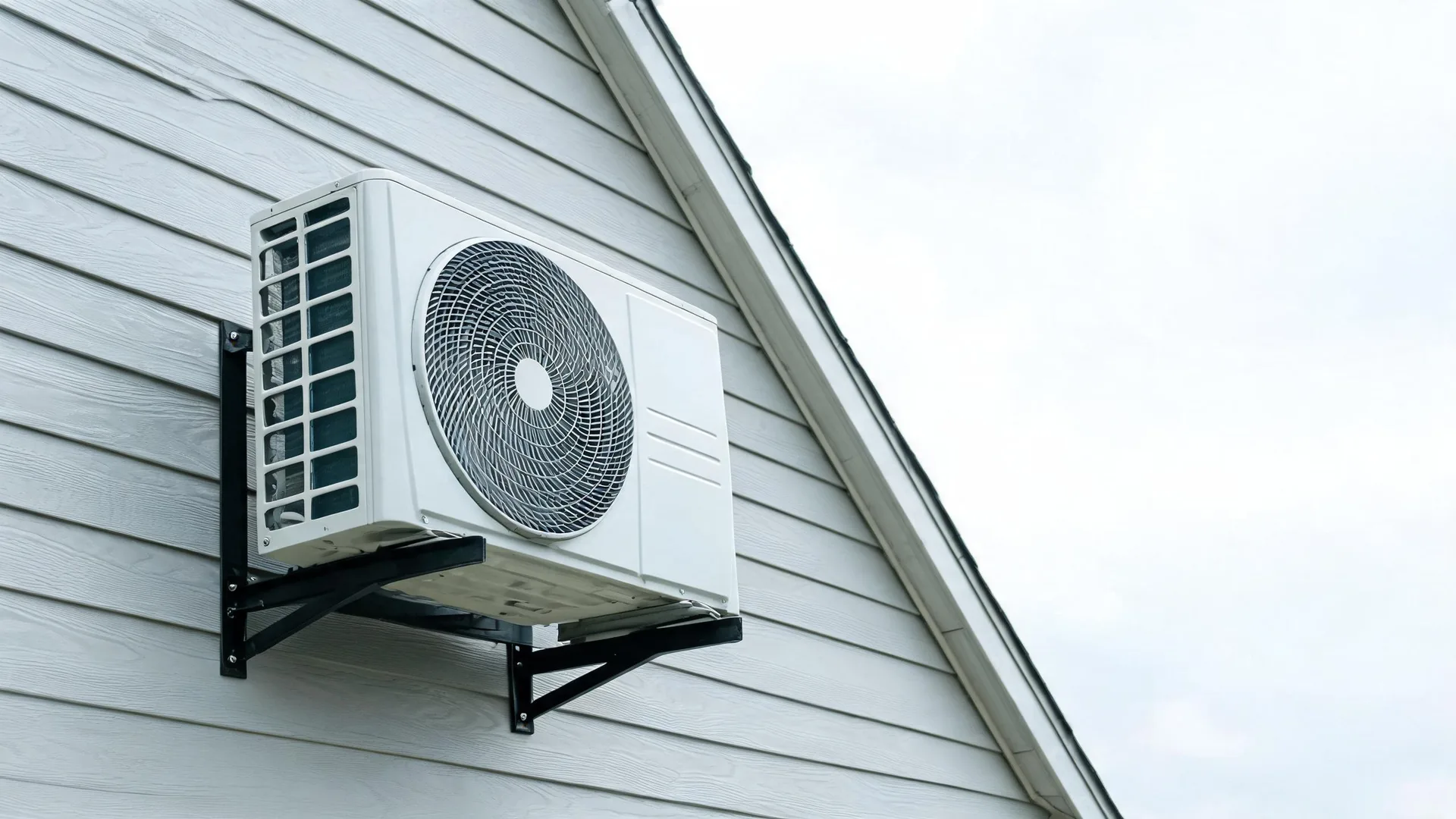
A white mini-split air conditioner outdoor condenser unit mounted on metal brackets against a beige stucco exterior wall, with a blue sky and scattered clouds in the background.

The age of the house doesn't set the size

Half the homes in Washington County were built in 1977 or earlier, half in 1977 or later. That split doesn't point toward a bigger unit or a smaller one. A mini split is sized to the room it serves, not the age of the house around it. An older cape and a newer build go through the same process, measuring the space and sizing the unit to it. Nothing about the mix of homes here pushes toward oversizing or undersizing as a rule. What matters more for this system is how many hours a year it actually runs, which is what the time-lapse above shows.

The number of zones sets the price

Every indoor head needs its own line set and its own spot on the wall or ceiling, run back to the outdoor unit. A single-zone system is the simplest job there is. Add a second or third zone for other rooms and you're adding line sets, more labor, and an outdoor unit sized to carry all of them at once. The price follows the number of rooms you're conditioning, not the size of the house.
What's already there shapes the labor

Line sets have to travel from the outdoor unit to each indoor head, through a wall or up through a chase, and the electrical panel has to have room for a new dedicated circuit. A straightforward wall path and a panel with open capacity make for a quick install. A long run, a brick exterior, or a panel that needs upgrading first all add labor before the system itself ever gets mounted.

Ask what the unit is rated to do at low temperatures, not just what it's rated for at mild ones. Every mini split loses capacity as the outdoor temperature drops, but how much it loses varies a lot between models, and the spec sheet will show a rating at a cold outdoor temperature if the manufacturer tested for it. Ask how the quote handles the line set and whether the wall sleeve and pad are included, since those get left off some bids and added back later. Ask who services the brand locally, because a system nobody nearby carries parts for turns a simple repair into a wait. And ask for the room measurements the sizing is based on, not just a number of tons. A unit sized off square footage alone can end up too big for the room, which sounds like a benefit but actually makes it cycle on and off instead of running steady, and that's worse for comfort and for the compressor.

Install day starts with the outdoor unit and the line set path, not the indoor head on the wall. The installer runs refrigerant lines, a condensate drain and a power cable from the outdoor condenser to each indoor unit, usually through a small hole in the wall behind where the head will hang. That line set gets pulled into a vacuum before any refrigerant moves, which clears out air and moisture that would otherwise sit in the system and cause problems later. Once the lines hold vacuum, the refrigerant valves open and the charge goes in. The last part of the day is running the system in both heat and cool, checking the temperature split at each head, and making sure the condensate drains the way it should instead of backing up.